September 27, 2026 • Dale Merrick • 11 min reading time • Prices verified June 5, 2026
Marine Fuel Additives: Ethanol Damage, Corrosion, and What Boat Owners Actually Buy
If you’ve noticed your boat sitting between fishing trips and then refusing to start cleanly — or if you’ve pulled a fuel filter that looked like it was packed with caramel — you’ve already met ethanol damage firsthand. Most pump gasoline in the United States today contains up to 10% ethanol (E10), and while car engines tolerate this reasonably well, marine fuel systems face a set of problems that are genuinely different. Boats sit longer between uses, fiberglass tanks absorb moisture, and the fuel itself can “phase separate” — meaning the ethanol pulls water out of the air and sinks to the bottom of the tank as a separate layer that your engine then tries to run on. This article breaks down the three leading marine fuel additives, what they actually do for ethanol and corrosion protection, and what real owners reach for — so you can make a confident, informed call before your next season opener.
Why Marine Fuel Systems Are a Different Problem Than Your Car
The U.S. Energy Information Administration, in its reference material on fuel ethanol use, notes that ethanol blending is now standard across essentially all retail gasoline in the lower 48, with E10 as the floor. On the road, this is largely a non-event for modern fuel-injected vehicles. In a boat, it becomes a maintenance variable you have to actively manage.
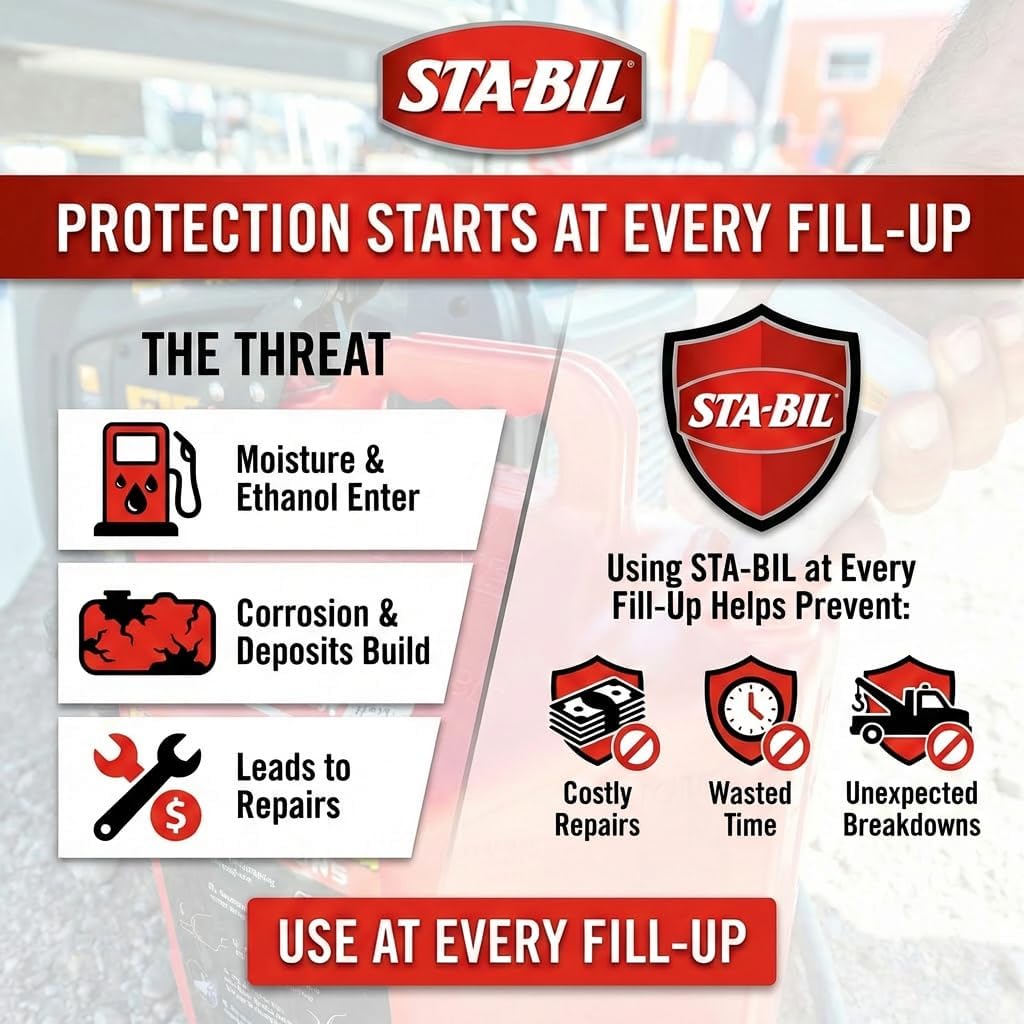
Here’s the core issue: ethanol is hygroscopic — it absorbs water from the atmosphere. In a car tank, the fuel turns over fast enough that this rarely matters. In a boat stored between weekends, or over a winter, the ethanol in the tank scavenges humidity through the tank vents and fuel cap. Once the water-ethanol mixture reaches roughly 0.5% water content — a threshold documented by ASTM International in its ASTM D4814 Standard Specification for Automotive Spark-Ignition Engine Fuel — phase separation occurs. The ethanol and water drop out of the gasoline and form a separate layer at the bottom of the tank. Your engine draws fuel from the bottom. You can see where this goes.
The corrosion angle compounds the problem. Older aluminum carburetors, brass fittings, rubber fuel hoses rated for pre-ethanol fuel, and fiberglass tank liners are all vulnerable. The National Marine Manufacturers Association, in its consumer guidance bulletin “Ethanol and Your Boat,” explicitly warns boat owners about elastomer degradation and aluminum corrosion from ethanol exposure in systems not designed for it. Engines that predate 2009 — when the NMMA began certifying “ethanol compatible” materials — are in the most exposed position.
The U.S. Environmental Protection Agency’s technical documentation on fuel economy and emissions from ethanol blends confirms that older elastomers and aluminum alloys face elevated degradation risk at sustained ethanol exposure. The “treat at storage” habit alone isn’t enough if the system is vulnerable at every fill.
The practical upshot: a marine fuel additive isn’t optional maintenance. It’s active risk management.
The Three Products That Dominate What Boat Owners Actually Buy
Three products dominate what boat owners are reaching for at the dock store or ordering online: STA-BIL 360 Marine, Star Tron Enzyme Fuel Treatment (Concentrated Formula), and Sea Foam SF-16. A secondary tier includes Techron Marine and CRC Phase Guard 4, each of which targets similar use cases but with narrower market penetration. Here’s how the top three differentiate — and which tier each one fits.
STA-BIL 360 Marine
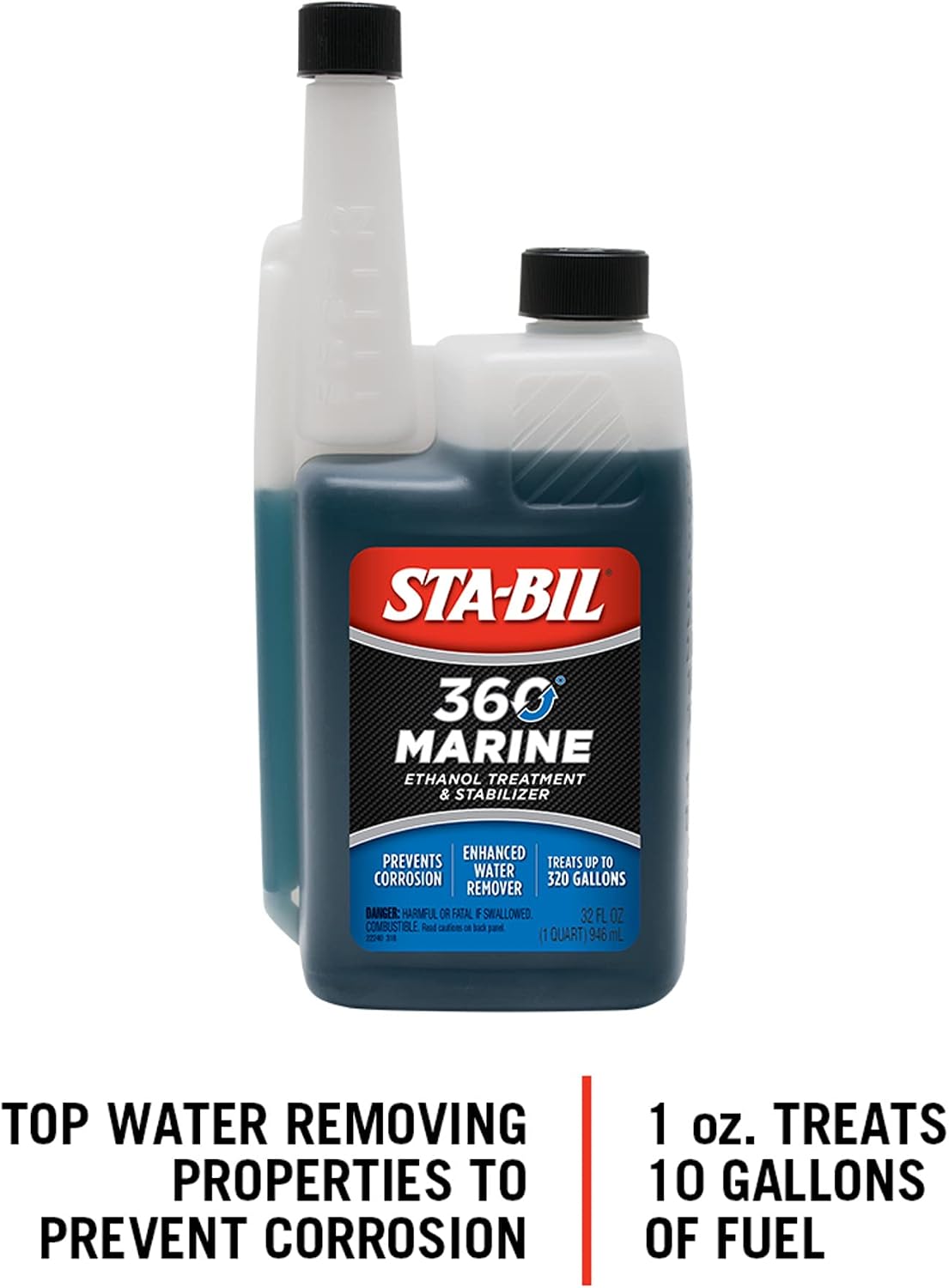
STA-BIL 360 Marine is Gold Eagle’s flagship for the boat market, and the formulation targets exactly the problems outlined above. Per Gold Eagle’s technical data sheet for the product, STA-BIL 360 Marine claims to prevent phase separation, deposit buildup, and corrosion, while stabilizing fuel for up to 12 months in storage. The product includes a corrosion inhibitor package designed for both ferrous and non-ferrous metals — meaningful for the mixed-material fuel systems common on older outboards and sterndrives.
What’s worth noting for comparison shoppers: STA-BIL 360 Marine isn’t staying exclusively on boats. Owner feedback patterns across retail channels show it being used on older trucks, vintage cars, and stored seasonal equipment — the “marine” label signals serious ethanol and corrosion protection, not just a boating category. This reflects broad confidence in the formulation.
The gallon-jug purchase question deserves honest attention. At standard treat rates of approximately 1 oz per 5 gallons, a gallon of STA-BIL 360 Marine treats well over 600 gallons of fuel. If your boat holds a 30-gallon tank and you fill it four times a season, you’ll consume roughly a third of a quart per season. The gallon jug makes sense for a multi-vehicle household or a small fleet — not for a single-boat owner filling up monthly. Buy the smaller size if that’s your situation.
Is STA-BIL 360 Marine meaningfully different from STA-BIL 360 Protection? Yes. Both address ethanol and stabilization, but the Marine version’s corrosion inhibitor package is specifically formulated for the aluminum, brass, and other metals common in marine fuel systems, with greater emphasis on the moisture-intrusion conditions unique to marine environments. For a car or truck, 360 Protection is adequate. For a boat stored through a humid season, the Marine version addresses a more specific risk profile.
Sea
$29.99
In stock on Amazon
Check price on AmazonStar Tron Enzyme Fuel Treatment — Concentrated Formula
Star Tron takes a different technical approach. The active mechanism is an enzyme-based chemistry that claims to break down and homogenize phase-separated fuel — restoring it to a usable state rather than just preventing separation from occurring. This is a meaningful distinction from stabilizer-first products. Per Star Tron’s product documentation for the Concentrated Formula, maintenance dosing runs as low as 1 oz per 16 gallons, which owners consistently cite as the cost justification for a product that looks expensive per bottle on the shelf.
Across aggregated owner feedback, the consistent pattern for Star Tron is versatility: owners buy one bottle and treat every gas-powered machine they own — boat, lawn equipment, generator, ATV — citing the dilution ratio as the reason it makes economic sense to standardize on a single product. The reviews skew toward small-engine and marine users who want one solution to manage ethanol across an entire equipment inventory.
Two-stroke outboard compatibility comes up often enough to address directly. Per Star Tron’s product documentation, the Concentrated Formula is compatible with two-stroke engines at maintenance dosing levels and does not displace or dilute the oil-fuel ratio. This makes it genuinely versatile for owners running older two-stroke outboards alongside four-stroke main engines.
The honest limitation: Star Tron’s enzyme mechanism is well-documented in the brand’s own marketing, but independent third-party validation of phase-separation reversal under controlled conditions is not widely available in the public literature. Owners report positive results; the chemistry rationale is plausible; but the supporting data is largely manufacturer-provided.
STA-BIL
$10.99
In stock on Amazon
Check price on AmazonSea Foam SF-16
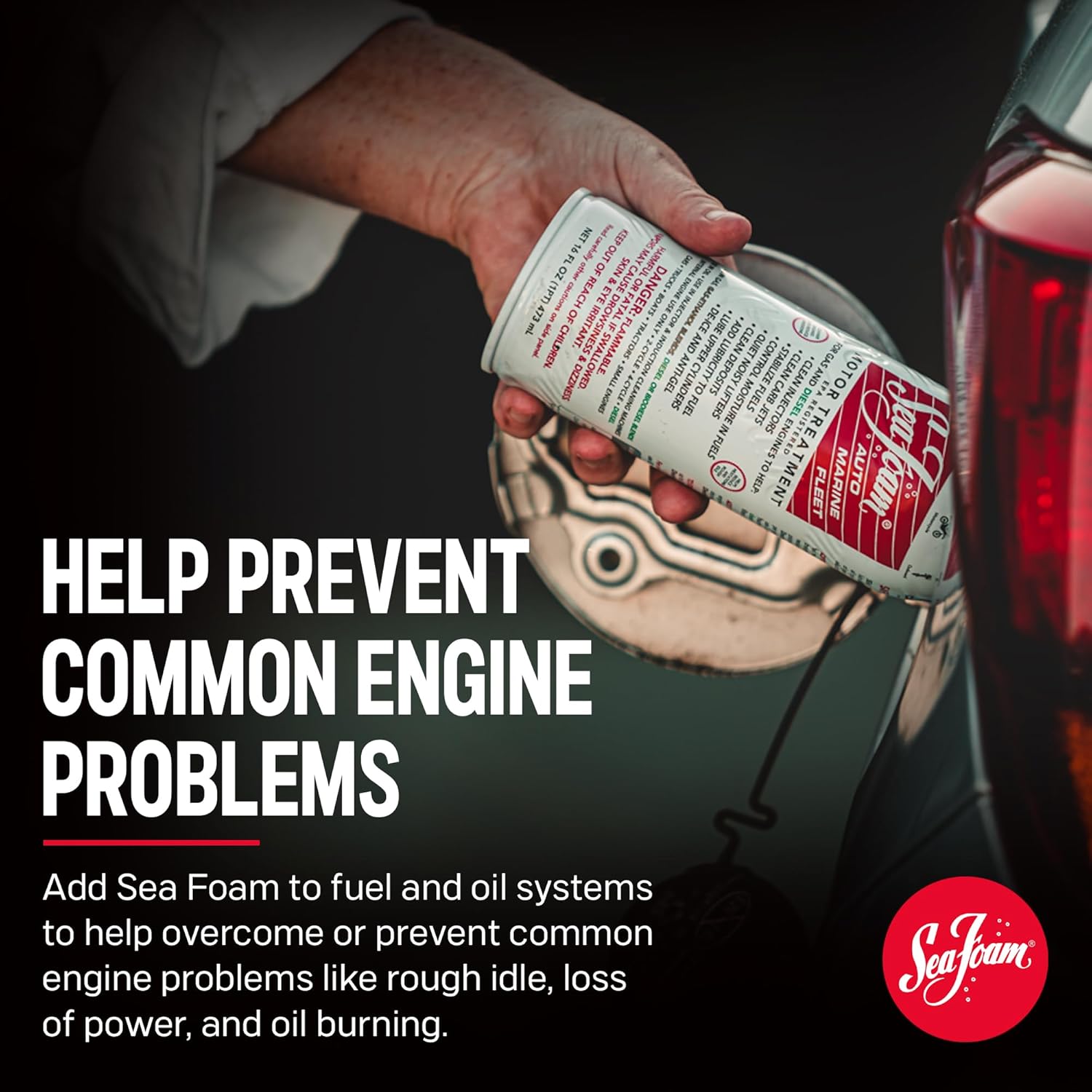
Sea Foam occupies a different position in the marine market. Owners who use it in outboards and sailboats consistently describe it as a “staple in marine maintenance” rather than a targeted ethanol or storage product — it’s the additive they run every few fills, not just at layup. Per Sea Foam’s published Safety Data Sheet for SF-16, the formulation consists of isopropyl alcohol, pale oil, and naphtha — a petroleum-based chemistry that functions as a cleaner-stabilizer. It addresses deposit formation, varnish, and some fuel stabilization, but its approach to ethanol is primarily as a fuel system cleaner rather than a dedicated phase-separation inhibitor.
Per Sea Foam’s own product description for SF-16, the product does help control moisture in fuel systems, but it is not marketed as a phase-separation preventer in the same targeted way as STA-BIL 360 Marine. This matters for an honest recommendation: if your primary concern is preventing ethanol phase separation in a boat stored for months, Sea Foam is not the strongest single-product answer. If your primary concern is keeping injectors or carbs clean, dissolving varnish deposits, and maintaining general fuel system health across multiple machines — including older outboards prone to carburetor deposits — it earns its reputation entirely.
A notable gap across all three products: none of the major owner feedback pools explicitly benchmarks corrosion protection performance. The praise for all three is almost entirely about smoothness, starting reliability, and fuel system cleanliness. Nobody is testing before-and-after corrosion outcomes on a zinc fitting or an aluminum carburetor throat. If corrosion inhibition is your primary concern — particularly on a pre-2009 engine with original fuel system components — you’re relying on manufacturer claims rather than independently validated data. STA-BIL 360 Marine has the most specific corrosion inhibitor marketing, but “most specifically marketed” is not the same as “independently verified.”
STA-BIL 22295
$6.99
In stock on Amazon
Check price on AmazonBy the Numbers: Quick Cost Comparison at Maintenance Dosing
| Product | Typical treat rate | Per-treatment cost (30-gal tank) | Best use case |
|---|---|---|---|
| STA-BIL 360 Marine | 1 oz per 5 gallons | ~6 oz per fill | Long-term storage, corrosion protection |
| Star Tron Concentrated | 1 oz per 16 gallons | ~2 oz per fill | Multi-equipment fleets, lowest cost-per-gallon |
| Sea Foam SF-16 | 1 oz per gallon (fuel treatment) | ~30 oz per fill | Active-season cleaning, deposit control |
Treat rates sourced from manufacturer product documentation. Costs vary by retailer and pack size; verify current pricing at point of purchase.
The Decision Frame: If X, Then Y
You’re choosing a marine fuel additive. Here’s the explicit decision rule:
If your primary risk is storage over 3+ months — the boat sits through winter, or you’re in a seasonal climate — STA-BIL 360 Marine is the most purpose-built answer. The 12-month stabilization claim per Gold Eagle’s technical data sheet, the corrosion inhibitor package, and the ethanol protection are co-designed for exactly this use case. Store with a full tank and a fresh treatment dose.
If you want one product across an entire equipment fleet — boat, generator, mowers, ATVs — and you want the lowest cost-per-treated-gallon, Star Tron Concentrated is the rational choice. The dilution math genuinely makes it the most economical option, and the documented two-stroke compatibility removes a common restriction for owners with older outboard fleets.
If your main concern is deposit buildup and general fuel system cleanliness — and you’re using the boat regularly enough that storage stabilization is secondary — Sea Foam SF-16 fits the use pattern that owners themselves describe. Run it every few fills, not just at layup.
If you have a pre-2009 engine with original fuel system components, prioritize a dedicated ethanol treatment at every fill-up, not just seasonally. As documented by the EPA in its technical material on ethanol blend fuel economy and emissions, older elastomers and aluminum alloys face elevated degradation risk with sustained ethanol exposure. The National Marine Manufacturers Association’s “Ethanol and Your Boat” bulletin reinforces this: routine treatment matters more than seasonal treatment alone when the underlying fuel system materials were never designed for ethanol.
Frequently Asked Questions
Is STA-BIL 360 Marine meaningfully different from STA-BIL 360 Protection for a boat? Yes. Per Gold Eagle’s product documentation, the Marine version includes a corrosion inhibitor package specifically formulated for the aluminum, brass, and other metals common in marine fuel systems, plus greater emphasis on the moisture-intrusion conditions unique to marine environments. For a car or truck, 360 Protection is adequate. For a boat stored through a humid season, the Marine version addresses a more specific risk profile.
Can Star Tron Concentrated Formula be used in a two-stroke outboard? Per Star Tron’s product documentation for the Concentrated Formula, yes — the product is compatible with two-stroke engines at maintenance dosing levels and does not displace or interfere with the oil-fuel ratio. This is one of the product’s genuine practical advantages for owners with older outboard fleets.
Does Sea Foam SF-16 protect against ethanol phase separation or just clean deposits? Primarily the latter. Sea Foam SF-16’s published SDS-documented chemistry is designed to clean, lubricate, and stabilize fuel systems — it addresses moisture as a secondary function but is not a targeted phase-separation inhibitor in the way that STA-BIL 360 Marine is. If phase separation is your primary concern, SF-16 alone is not the strongest single answer.
Should I treat my boat’s tank every fill-up or only before storage? Both, at appropriate dosing levels. At-storage treatment is where concentrated stabilizer and corrosion inhibitor work hardest. But if you have an older fuel system or a fiberglass tank exposed to humidity, maintenance-dose treatment at every fill-up is worth the modest cost — particularly with a low-cost-per-gallon product like Star Tron Concentrated.
How long can treated fuel actually sit in a fiberglass boat tank? Gold Eagle’s technical data sheet for STA-BIL 360 Marine rates treated fuel stability at up to 12 months under normal storage conditions. The practical guidance from the National Marine Manufacturers Association’s ethanol consumer bulletin is to store with a full tank — minimizing air space and humidity intrusion — and a fresh treatment dose, then re-treat in spring if the fuel has sat longer than six months. Partially-full tanks in hot, humid environments represent the worst-case scenario and will see accelerated degradation regardless of additive.