June 21, 2026 • Dale Merrick • 10 min reading time • Prices verified June 5, 2026
Lucas Oil Fuel Treatments: Which of the Four Formulas Fits Your Engine and Budget
If you’ve ever stood in the automotive aisle and grabbed a bottle of Lucas because the label says “Fuel Treatment” — only to find three other Lucas bottles nearby with different names — you’ve hit the most common Lucas purchase mistake. Lucas Oil makes four meaningfully different fuel system products, and they are not interchangeable. “Fuel treatment” in the additive world just means any liquid you add to your fuel tank to address chemistry the base fuel can’t handle on its own; it covers everything from injector detergents (chemicals that dissolve carbon and lacquer deposits on injector tips) to upper cylinder lubricants (compounds that reduce metal-to-metal wear in the fuel delivery system). The practical stakes are real: grab the wrong Lucas formula and you might spend $10 solving a problem you don’t have while ignoring the one you do. This article maps all four products against specific use cases — engine type, mileage bracket, and symptom profile — so your next purchase is a decision, not a guess.
The Four Formulas, Plainly Defined
Before any comparison, it helps to know what you’re actually choosing between. Lucas Oil’s fuel treatment lineup — as documented in their published product data sheets — breaks into four distinct products with genuinely different jobs.
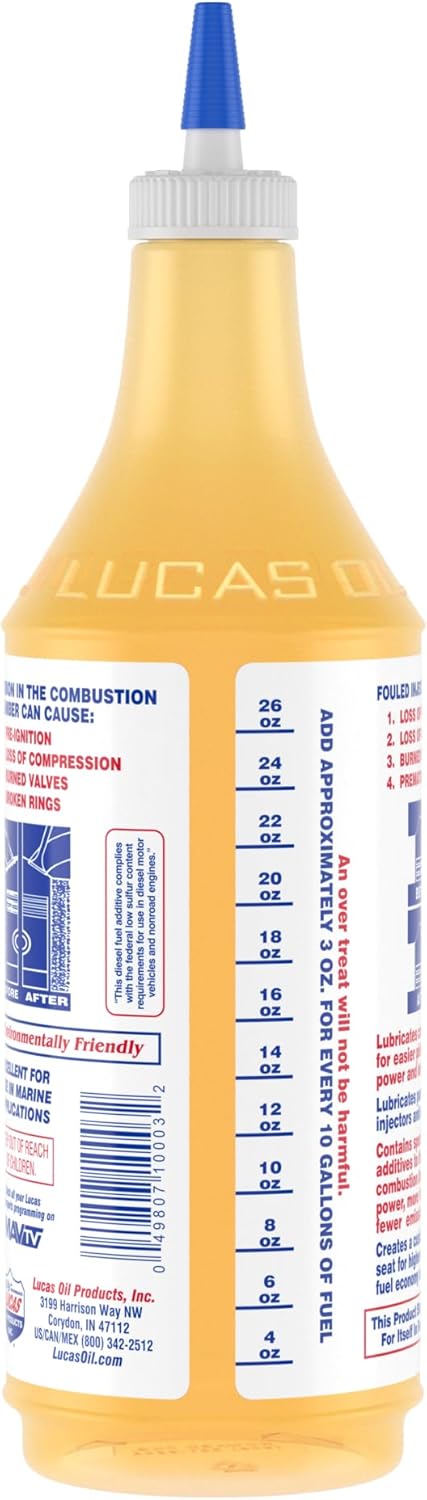
Lucas Fuel Treatment is a multi-function upper cylinder lubricant and detergent blend designed for ongoing, preventive maintenance rather than acute symptom correction. The formula conditions fuel, lubricates the upper cylinder (the area of the bore near the top of the piston stroke where the intake valves and injectors operate), and provides mild detergency to keep already-clean fuel systems clean. It is explicitly labeled as safe for both gasoline and diesel engines, which is rare for a single-SKU treatment at this price tier.
Lucas Upper Cylinder Lubricant & Fuel Treatment is often confused with the original, but this formulation places heavier emphasis on lubrication over detergency. It was developed with older fuel system hardware in mind — mechanical fuel pumps, carbureted engines, and older port-injected engines that run on ethanol-blended fuel and experience accelerated wear on valve seats and fuel pump components.
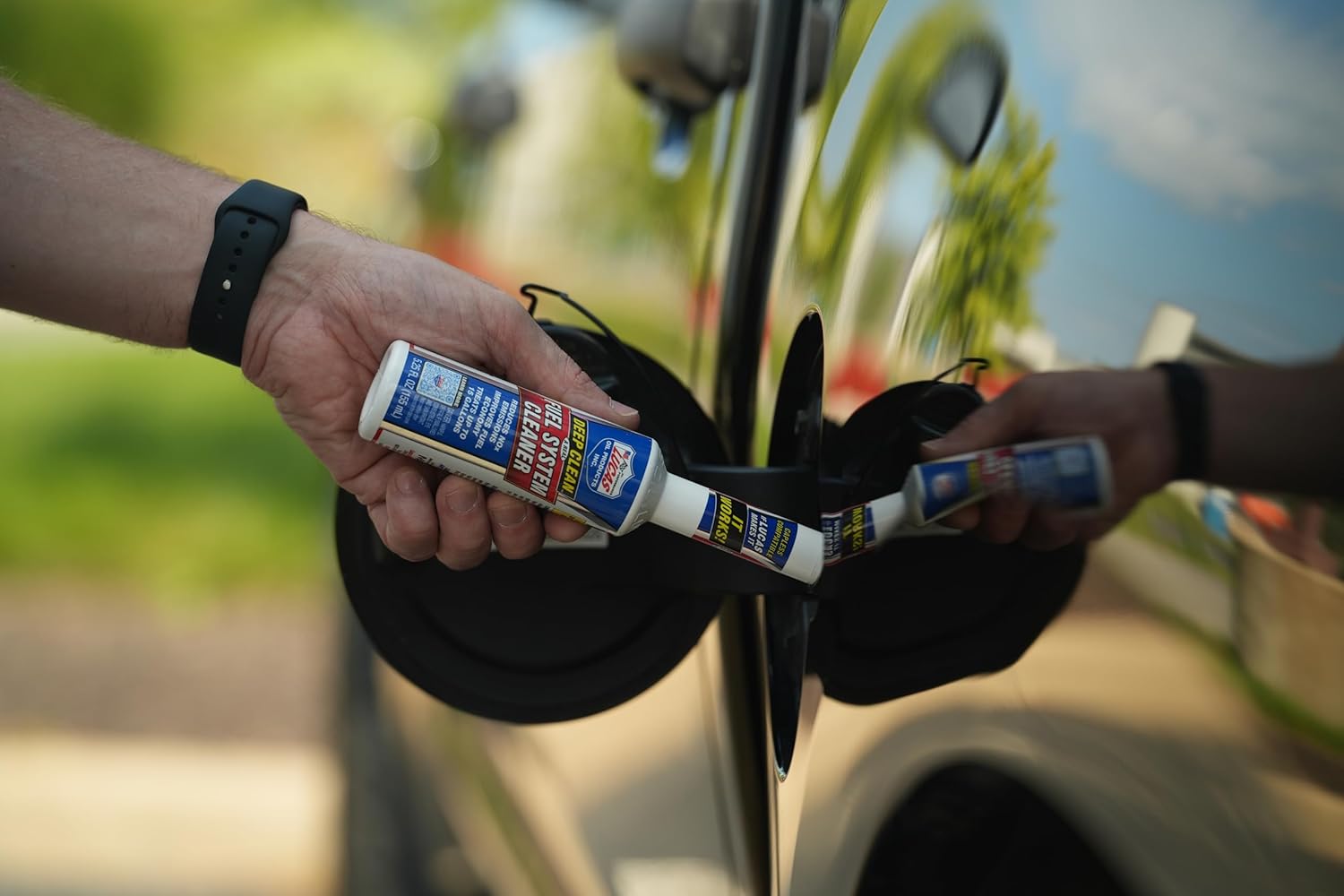
Lucas Deep Clean Fuel System Cleaner (5.25 oz concentrated bottle) is the active intervention product. The Deep Clean formula leads with a high-concentration detergent package designed to dissolve deposits that have already formed, not prevent future buildup. It is a one-shot dose, not a maintenance topper.
Lucas Complete Fuel System Renewal Kit is Lucas’s answer to the “my vehicle has 120,000 miles and I’ve never done a fuel system service” scenario. The kit bundles multiple treatment phases designed to be used sequentially over two or three fill-ups — a phased approach that mirrors staged cleaning protocols documented in fuel system service literature, including SAE International Technical Paper 2019-01-0035 on GDI injector deposit formation and remediation timelines.
Matching Formula to Use Case
Most buyers go wrong by treating these four products as strength tiers (weak → strong) rather than as purpose-built tools. The Deep Clean is not simply “stronger” Lucas Fuel Treatment — it is a different tool with a different chemistry emphasis and a different appropriate use case. The comparison sections below break down each scenario using H3 subsections with tier designations so you can identify your fit at a glance.
Lucas Fuel Treatment — The Ongoing Maintenance Pick
Best for: Diesel owners, long-haul drivers, and anyone who wants to integrate a fuel additive into every oil-change interval on a clean, well-maintained engine.
The original Lucas Fuel Treatment earns its place in this category because it is the only formula in the Lucas lineup explicitly documented as safe for both gasoline and diesel engines, per Lucas Oil’s own product data sheets. For diesel operators running large tanks — pickups towing frequently, fleet vans, or work trucks — the 1-gallon format makes the per-ounce cost math work for a regular schedule.
The preventive logic here aligns with what Popular Mechanics describes in their fuel additives overview: maintenance-dose products are calibrated to prevent deposit accumulation, which means their detergent concentration is deliberately lower than a shock-cleaning product. That is the correct chemistry for a fuel system that is already in good condition. Using a concentrated cleaner every fill-up on a healthy engine is both unnecessary and wasteful.
Lucas’s published documentation supports every fill-up for maximum benefit, with every 3,000 miles as a workable minimum. Most long-term users in the owner review record settle on every other fill-up as a practical middle ground with consistent results.
Lucas 10669
$5.79
In stock on Amazon
Check price on AmazonLucas Deep Clean Fuel System Cleaner — The Symptom-Correction Pick
Best for: Any driver experiencing active hesitation, stumble, rough idle, or sluggish throttle response attributable to injector deposits.
The Deep Clean’s 5.25 oz concentrated dose is designed to dissolve deposits that have already formed on injector tips and intake valves — not to maintain a clean system. Underhood Service, in their 2023 coverage of fuel system service for GDI and turbocharged engines, describes this distinction clearly: a concentrated detergent hit can break down accumulated lacquer deposits on injector tips faster than a maintenance-dose product ever would, because maintenance doses are calibrated to prevent accumulation rather than dissolve existing buildup.
The owner review pattern for Deep Clean is distinctive compared to maintenance products: reported symptom improvement tends to appear within a single tank rather than over multiple fill-ups. Hesitation under load, stumble at idle, and cold-start roughness are the most frequently cited symptoms that owners attribute to a successful Deep Clean dose.
The 5.25 oz format has no ongoing interval recommendation — it is a situational tool. If symptoms return after several months, a repeat dose is reasonable. If symptoms resolve and stay resolved, transitioning to the standard Lucas Fuel Treatment on a regular schedule is the appropriate follow-up protocol.
Lucas
$9.89
In stock on Amazon
Check price on AmazonLucas Complete Fuel System Renewal Kit — The High-Mileage Reset Pick
Best for: Vehicles at 100,000+ miles with no prior fuel system service history.
The Complete Renewal Kit earns its price premium in one specific scenario: a vehicle that has accumulated significant mileage without any fuel system service. The sequential-dose design addresses a real chemistry problem — you cannot dissolve a decade of injector varnish in a single tank without potentially mobilizing enough debris to stress your fuel filter. The kit’s phased approach over two to three fill-ups mirrors the staged cleaning protocols described in SAE International Technical Paper 2019-01-0035, which documents deposit formation rates and the remediation timelines required to address them safely.
Car and Driver’s overview of fuel system cleaners notes this two-phase logic — shock cleaning followed by maintenance dosing — as the standard recommended protocol across the additive category. The Renewal Kit packages that protocol into a single purchase, which reduces the decision burden for drivers who would otherwise need to sequence individual products themselves.
Once the kit is complete and the fuel system is at a clean baseline, transitioning to the standard Lucas Fuel Treatment on a regular interval is the appropriate maintenance path forward.
Lucas
$30.98
In stock on Amazon
Check price on AmazonLucas Upper Cylinder Lubricant & Fuel Treatment — The Legacy Engine Pick
Best for: Pre-fuel-injection engines, carbureted vehicles, and any engine running E10 or higher ethanol blends on older hardware.
Ethanol-blended fuels (E10, E15, and higher) are harder on older rubber fuel system components and can accelerate valve seat wear in engines designed before hardened seat inserts became standard. The Upper Cylinder Lubricant formulation is the lubrication-forward blend in the Lucas lineup, developed specifically for older mechanical fuel pumps, carbureted systems, and port-injected engines that pre-date GDI architecture.
If you are running a pre-1990s vehicle, a classic car, or any engine where the manufacturer did not design around modern ethanol blends, this is the formula that addresses the relevant failure mode — not the original Fuel Treatment and not the Deep Clean.
Lucas
$9.89
In stock on Amazon
Check price on AmazonComparison at a Glance
| Formula | Primary Function | Gasoline / Diesel | Typical Dose Interval | Target Use Case |
|---|---|---|---|---|
| Lucas Fuel Treatment | Lubrication + mild detergency | Both | Every fill-up or 3,000 mi | Preventive maintenance, diesel safe |
| Upper Cylinder Lubricant | Lubrication-heavy blend | Gasoline | Every fill-up | Pre-GDI, carbureted, high-ethanol |
| Deep Clean 5.25 oz | High-concentration detergency | Gasoline | Single-tank shock dose | Active symptom correction |
| Complete Renewal Kit | Sequential detergent + maintenance | Gasoline | 2–3 tank sequence | 100K+ mile neglected system reset |
The 1-Gallon Format Question
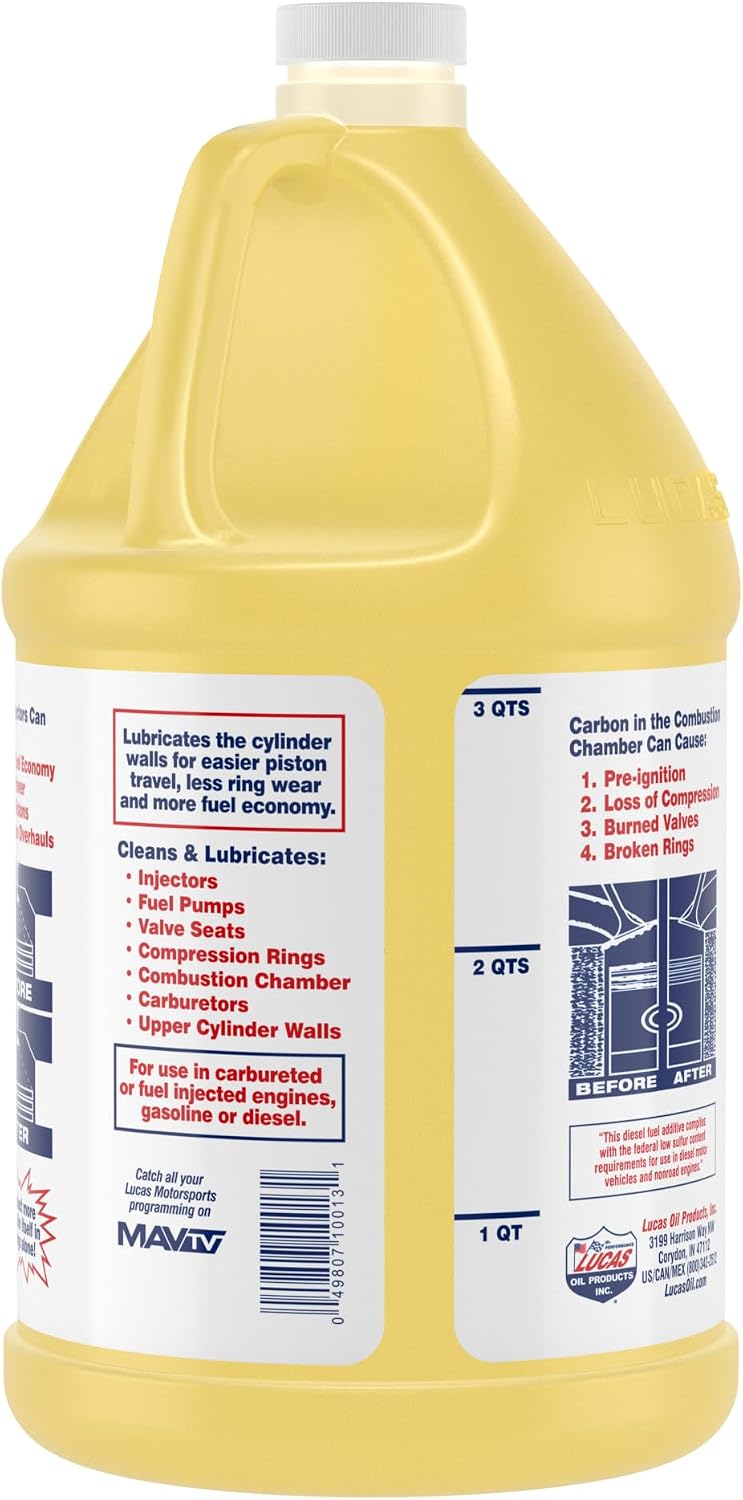
One of the most common purchase questions concerns the 1-gallon Lucas Fuel Treatment jug: is it the same formula as the smaller bottles, or a diluted bulk version? Per Lucas Oil’s product documentation, the 1-gallon format contains the same chemistry as the smaller bottles — it is a volume package for high-mileage fleets, diesel operators treating large tanks, and shops integrating fuel treatment into oil-change service menus. The per-ounce cost advantage is meaningful for anyone on a regular schedule. If you are a fleet operator or an independent shop, the gallon format is the one that makes the economics work.
Can You Stack Deep Clean and Fuel Treatment Together?
Yes, the chemistries are compatible, but the better protocol is sequential rather than simultaneous. Use Deep Clean first as a shock dose when symptoms warrant it, run it through a full tank, then return to the standard Fuel Treatment on your normal maintenance interval. Car and Driver’s fuel system cleaner overview notes this two-phase logic — shock cleaning followed by maintenance dosing — as the standard recommended approach across the category. Using both products in the same fill-up does not create a safety problem, but it does not add proportional benefit either. Deep Clean’s concentrated detergent package does its work fast; the follow-up Fuel Treatment then keeps newly clean surfaces from re-accumulating deposits.
Frequently Asked Questions
What is the difference between Lucas Fuel Treatment and Lucas Deep Clean — can you use both? Lucas Fuel Treatment is a maintenance product: mild detergency plus upper cylinder lubrication, designed to keep a clean system clean. Lucas Deep Clean is a high-concentration detergent shot designed to dissolve existing deposits. They serve different phases of fuel system care. You can use both — Deep Clean first to clear deposits, then Fuel Treatment on a regular schedule to prevent their return.
How often should you use Lucas Fuel Treatment? Lucas’s published guidance supports every fill-up for maximum effect, with every 3,000 miles as a workable minimum. Most long-term owners settle on every second fill-up as a practical middle ground.
Is Lucas Fuel Treatment safe to use in diesel engines? The original Lucas Fuel Treatment is explicitly documented as safe for both gasoline and diesel engines per Lucas Oil’s product data sheets. The Deep Clean and Upper Cylinder Lubricant variants are formulated for gasoline applications. The diesel-safe designation is clearly noted on the original treatment label.
Does the Lucas 1-gallon format contain the same formula as the smaller bottles? Per Lucas Oil’s product documentation, yes — the 1-gallon format is the same chemistry as the smaller bottles, packaged for volume buyers including fleets, diesel operators with large tanks, and shops running it as part of a service offering.
Is the Complete Fuel System Renewal Kit worth the price over buying individual bottles? For a vehicle with 100,000+ miles and no prior fuel system service history, the kit’s phased sequential approach is meaningfully different from a single-bottle dose and worth the premium in that specific scenario. If you are already on a regular maintenance interval with a well-serviced fuel system, the individual bottle is the smarter buy.