August 3, 2026 • Dale Merrick • 10 min reading time • Prices verified June 5, 2026
High-Frequency Fuel Treatment Routines: What Owners Who Add Something Every Fill-Up Are Actually Using
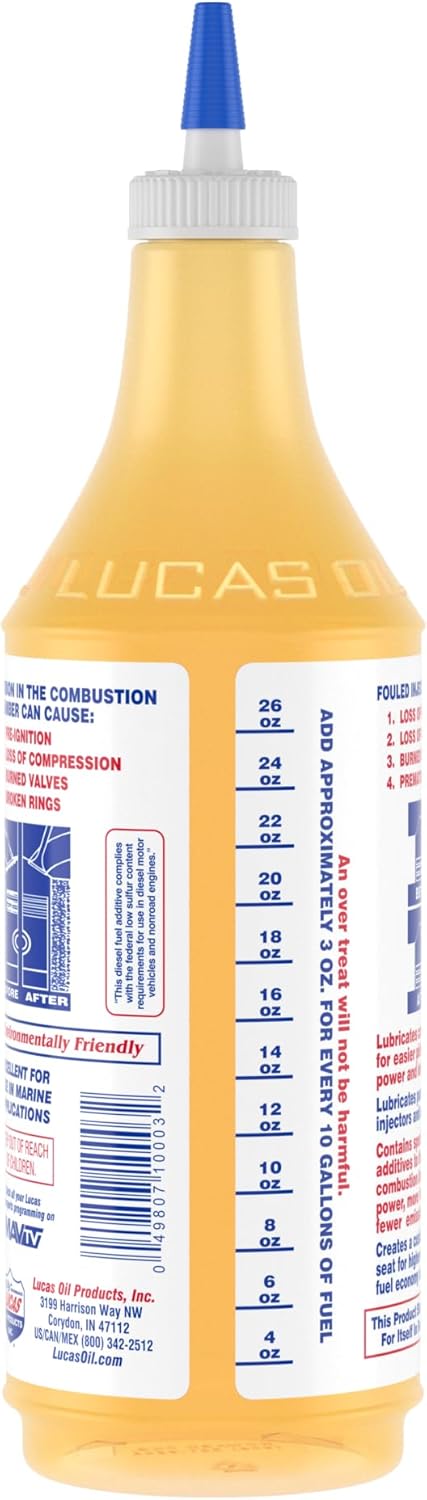
A fuel treatment additive is exactly what it sounds like — a chemistry package you add to your fuel tank to clean injectors, protect fuel system components, or improve combustion quality. Most product labels suggest using them occasionally, maybe every oil change or once a season. But a meaningful subset of owners never stops. They dose every fill-up, treat it as routine as checking tire pressure, and point to six-figure odometer readings with zero fuel system work as the evidence. This article is about that habit: who’s doing it, what they’re actually running, how the economics pencil out, and whether continuous use is genuinely protective or just expensive comfort.
If you’re already familiar with terms like cetane number, DPF regeneration cycles, and polyetheramine concentration, you’re in the right place. If some of those are new, don’t worry — we’ll define them as they come up.
The Long-Haul Owner Profile: Who Actually Uses Something Every Fill-Up
The most persuasive argument for high-frequency additive use doesn’t come from product marketing — it comes from the owners who show up in long-form reviews at the 150,000-, 200,000-, and 250,000-mile mark with the same original fuel pump and injectors.
A Ram 3500 Cummins owner reviewing Hot Shot’s Secret Everyday Diesel Treatment (EDT) at 201,000 miles describes zero fuel system issues across the truck’s entire life, attributing it specifically to consistent EDT use since the odometer hit five digits. That’s not a controlled study, and reviewers at automotive forums and retail review aggregators are careful to note that correlation isn’t causation — but when the pattern repeats across dozens of high-mileage diesel owners using the same product, it stops being anecdotal and starts being a signal worth examining.
The same pattern appears in gasoline applications. A Jetta VR6 owner who reports running original injectors and original fuel pump at 25 years of use attributes the longevity to a consistent Lucas Fuel Treatment habit, applied every other fill-up without exception. A 6.0 Power Stroke owner — a platform historically unforgiving to fuel system neglect — describes running what they call a “Hot Shot’s Secret ecosystem”: EDT in the tank, Stiction Eliminator in the oil, FR3 friction reducer stacked on top. These aren’t casual users. They’ve built structured maintenance philosophies around continuous chemical support.
The through-line across gasoline and diesel high-frequency users: they frame additive use as insurance, not cure. This distinction matters. Cure-mode dosing — dumping a bottle in when something already sounds rough — is reactive and often less effective. Insurance-mode dosing is preventive, lower-concentration, and compounded over time.
What Gasoline Engine Owners Are Actually Running
Gasoline high-frequency users tend toward lighter, lower-concentration products — not because they’re less serious, but because gasoline engines operating with port injection or modern GDI (Gasoline Direct Injection, where fuel sprays directly into the cylinder rather than the intake port) respond well to gentle, continuous cleaning rather than periodic shock doses.
Lucas Fuel Treatment is the most commonly cited every-fill-up gasoline product across aggregated long-term reviews. Owners consistently report using it at the low end of the dosage range — often a single ounce per tank on a 15-gallon fill — rather than the full treatment rate. At this rate, a 32-ounce bottle stretches considerably, and the per-tank cost drops well below a dollar. The attraction is lubricity improvement (protection for fuel pump components, which are lubricated by the fuel itself in most designs) combined with mild detergency.
STA-BIL 360 Protection appears frequently in another pattern: owners running it at a continuous micro-dose for fuel stability and mild anti-corrosion protection, particularly in vehicles that sit for stretches between uses. The 360 formula is specifically formulated to address ethanol-blended fuels, which are hygroscopic — meaning they attract and absorb water from ambient air, a process that can promote corrosion inside aluminum fuel system components.
What gasoline owners tend not to do at every fill-up: run high-concentration PEA (polyetheramine — the active detergent molecule in premium injector cleaners like Chevron Techron Concentrate Plus and BG 44K) at full shock-dose rates. Per the SAE Technical Paper 2019-01-0249 on fuel injector deposit formation, PEA-based chemistry is highly effective at removing deposits, but the intent behind high-PEA products like BG 44K is periodic intensive treatment, not continuous low-dose maintenance. High-frequency gasoline users who understand this distinction typically run BG 44K or Techron Concentrate quarterly as a “deep clean” layer on top of their every-fill-up lighter maintenance product.
What Diesel Engine Owners Are Actually Running
Diesel users show a more structured, protocol-driven approach — and the products they select have significantly more specific performance targets.
Hot Shot’s Secret EDT is the dominant choice among long-haul diesel owners running high-frequency routines. The gallon-format product is critical to understanding why: the gallon treats up to 3,200 gallons of diesel fuel per the manufacturer’s treatment rate documentation. At average diesel consumption across a mix of fleet and personal truck applications, that’s a meaningful operational period — and it reframes the cost calculation entirely. A gallon purchased in bulk is not a premium product; it’s a cost-per-treatment story that often lands below $0.03 per gallon of fuel treated.
EDT’s chemistry targets lubricity, cetane improvement (cetane number is diesel’s equivalent of octane — higher numbers mean more complete, controlled combustion), injector cleanliness, and fuel stability. Diesel owners specifically cite lubricity as their primary concern, because ULSD (Ultra-Low Sulfur Diesel, the standard formulation since the mid-2000s) has lower inherent lubricity than older high-sulfur formulations. Fuel injection systems — particularly the high-pressure common rail systems in modern Cummins, Duramax, and Power Stroke applications — have extremely tight tolerances, and lubricity degradation shows up first in injection pump and injector tip wear.
Archoil AR6500 occupies a more specific niche: DPF (Diesel Particulate Filter — the emissions device that captures soot from diesel exhaust) management in modern emissions-equipped trucks. The most measurable outcome reported by AR6500 users is the extension of DPF regeneration intervals. DPF regeneration is the automatic high-temperature burn-off cycle that clears accumulated soot; it consumes fuel, adds heat stress to the aftertreatment system, and reduces fuel economy while it’s running. Owners running AR6500 consistently report regen intervals extending past 1,000 miles — in some cases significantly past — versus the 300-500 mile intervals common on vehicles with degraded fuel combustion efficiency. That’s a real, measurable operational metric, not a subjective impression.
Does Hot Shot’s EDT replace a standalone cetane booster? The product’s technical data sheet puts the cetane improvement contribution at a meaningful level for a multi-function additive, but dedicated cetane boosters targeting 10+ point improvements will outperform EDT’s cetane component in isolation. For most owners running pump diesel that’s already at 40-45 cetane (the typical ULSD baseline), EDT’s contribution is sufficient. For owners in cold climates, high-altitude operation, or running engines with combustion sensitivity to cetane variation, a standalone booster stacked on top is worth evaluating.
The Cost Math: Gallon Formats vs. Single-Use Bottles
By the numbers:
- Hot Shot’s Secret EDT (gallon): treats ~3,200 gallons of diesel → roughly $0.02–$0.03/gallon treated
- Lucas Fuel Treatment (32 oz): ~32 treatments at 1 oz/tank → approximately $0.35–$0.50/treatment
- BG 44K (11 oz, periodic): approximately $0.25–$0.30/gallon of fuel tank capacity, used quarterly
- Single-use 12 oz bottles (generic): typically $1.00–$2.00/treatment, least cost-efficient format
The cost argument for gallon formats is decisive for high-frequency users. The per-treatment math on single-use bottles assumes you’re using the product once — as soon as that changes to every-fill-up or every 5,000 miles, the gallon purchase pays for itself within two to three months of use at average fill frequencies.
Consumer Reports’ 2023 automotive editorial on fuel additives notes that the category’s biggest variable in cost-effectiveness is format discipline — buyers who purchase the right volume tier for their actual use cadence see the strongest value, while buyers who buy single-use bottles for a habit-level routine are paying a significant premium for packaging.
Should You Still Run a Periodic Deep-Clean if You’re Dosing Every Fill-Up?
Yes — and this is the question most high-frequency users get wrong by omission.
Continuous-dose products are designed for maintenance chemistry: keeping clean components clean, maintaining lubricity, modest ongoing detergency. They are not formulated to remove established deposits. If you’re starting a high-frequency routine on a vehicle with existing mileage and no prior additive history, the engine’s fuel system likely has some level of deposit accumulation already. Running Lucas at every fill-up won’t reverse that — it’ll slow future accumulation while leaving existing deposits in place.
The correct protocol, endorsed by the usage patterns of long-term high-mileage owners in aggregated reviews, is a front-loaded deep clean (BG 44K, Techron Concentrate Plus, or for diesel, a concentrated flush product) followed by transition to the maintenance-dose routine. Then, run a periodic deep-clean product — quarterly, semi-annually, or at oil change intervals depending on your engine type and operating conditions — on top of the continuous routine.
GDI engines have an additional complication: fuel-born additives cannot reach intake valve deposits, because GDI injectors spray directly into the cylinder, bypassing the intake valves entirely. CRC GDI IVD Intake Valve and Turbo Cleaner is specifically designed for topside application (sprayed into the intake tract, not the fuel tank) and addresses the carbon accumulation that no fuel additive can reach. High-frequency GDI owners should treat this as a separate maintenance axis from their tank-additive routine.
Frequently Asked Questions
Is it safe to use Lucas Fuel Treatment every single fill-up, or does it build up harmful deposits over time?
Lucas Fuel Treatment is formulated for continuous use at its maintenance dosage rate. Owners running it long-term at 1 oz per tank report no accumulation issues; the chemistry is combusted along with the fuel. The concern about “buildup” applies more to products with high carrier solvent concentrations used above recommended dose — not to properly dosed maintenance additives. Follow the label rate, and continuous use is safe.
Does Hot Shot’s Secret EDT actually replace the need for a standalone cetane booster?
For most diesel owners on standard pump fuel in normal operating conditions, EDT’s cetane contribution is sufficient as part of its multi-function package. Per the manufacturer’s technical data, it is not designed to deliver the 10+ point cetane improvements available from dedicated boosters. If your application demands maximum cetane — cold starts in extreme temperatures, high-altitude operation, or performance tuning — a standalone cetane booster remains the right tool.
How do I calculate the cost per tank for a gallon-size additive vs. single-use bottles?
Divide the retail price of the gallon by the number of treatments the manufacturer specifies at the standard dose rate. For EDT treating 3,200 gallons, divide by your average tank size to get treatment count, then divide the gallon price by that number. Compare against the single-use bottle price. The gallon wins at almost any consistent use cadence above monthly.
Should I still use a periodic deep-clean product if I’m already dosing every fill-up?
Yes. Maintenance-dose products prevent new deposits; they don’t dissolve established ones. Run a periodic high-concentration cleaner — quarterly is a common interval among high-mileage owners — as a separate layer on top of your routine. Think of the continuous product as the mop and the periodic product as the deep scrub.
Does continuous additive use void any powertrain warranties I should know about?
Under the Magnuson-Moss Warranty Act (U.S. federal law governing consumer product warranties), a manufacturer cannot void your warranty simply because you used an aftermarket additive, unless they can demonstrate the additive caused the specific failure being claimed. Using products that meet OEM fuel specifications and are used within their labeled dosage parameters is not a warranty risk in practice. For European vehicles under OEM chemistry standards, verify that your additive of choice carries relevant OEM approvals (documented approval numbers from BMW, VW, or Mercedes-Benz, as applicable) to stay within the manufacturer’s recommended chemistry ecosystem.