September 22, 2026 • Dale Merrick • 11 min reading time • Prices verified June 5, 2026
Enzyme vs. Chemical Fuel Stabilizers: Which Formula Actually Saves Small Engines
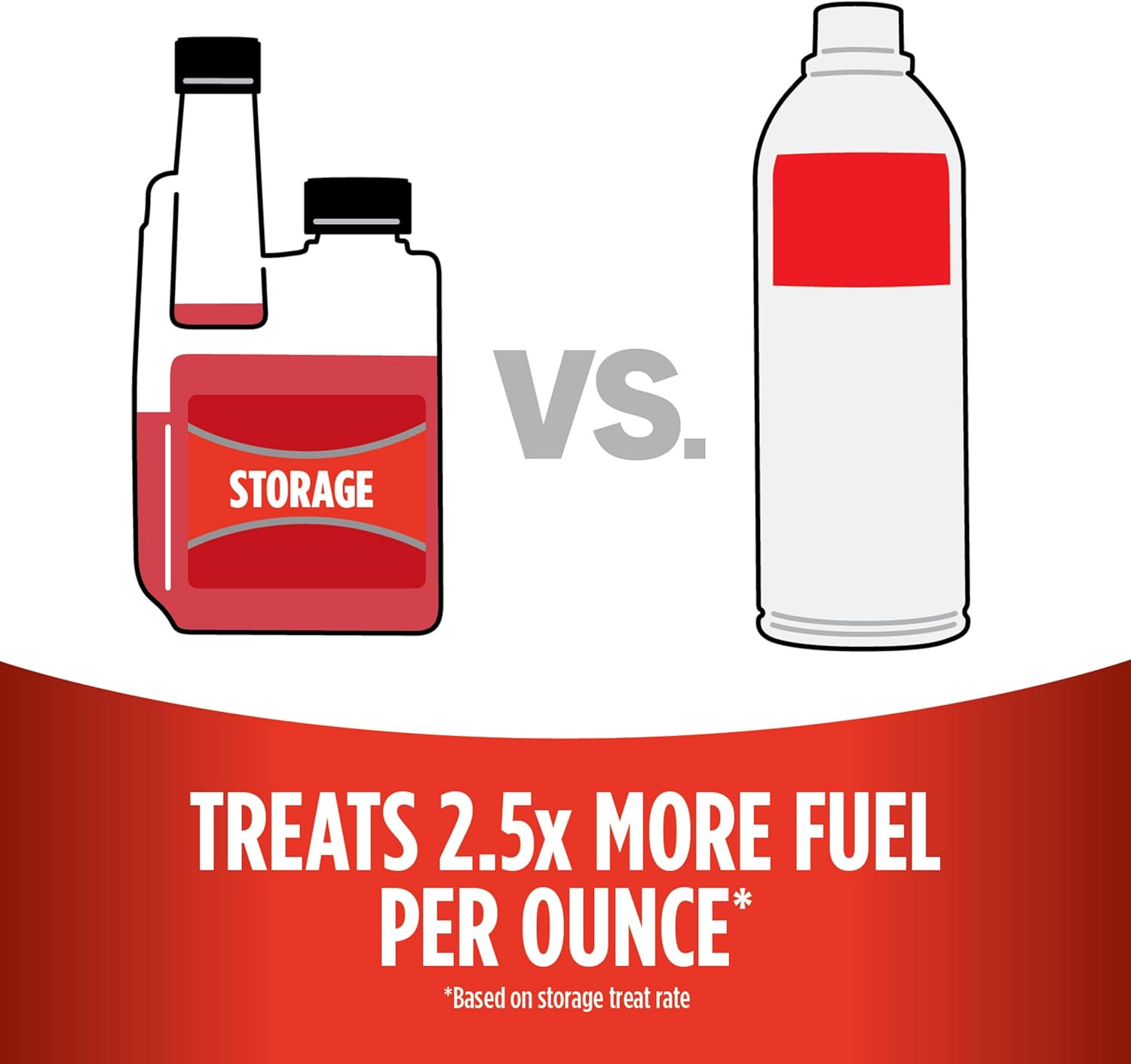
If your lawn mower, generator, or snowblower sat all winter and now cranks like it’s annoyed at you, the fuel in that tank is almost certainly the problem. Gasoline isn’t shelf-stable — it starts oxidizing and breaking down within 30 days, and modern pump gas blended with ethanol accelerates that clock significantly. The U.S. Energy Information Administration, in its publication Ethanol and the U.S. Gasoline Supply (2025), reports that virtually all retail pump gasoline in the country is E10 (10% ethanol by volume), with E15 expanding in availability — meaning the ethanol problem is inescapable for most small-engine owners. A fuel stabilizer is a chemical or biological additive you mix into gasoline specifically to slow or interrupt that decay, extending the window during which the fuel can still burn cleanly in a small engine. There are two meaningfully different approaches: enzyme-based formulas, like Star Tron, which use biological catalysts to modify how fuel ages; and chemical stabilizers, like the STA-BIL family, which use antioxidants and corrosion inhibitors to seal fuel against further damage. This article lays out exactly how each approach works, where each one wins, what the real shelf-life math looks like, and how to decide which one belongs in your garage.
How Each Formula Actually Works
Understanding the mechanism isn’t just academic — it tells you which product is the right tool for your specific situation.
Chemical Stabilizers: Antioxidant Armor
STA-BIL Storage, STA-BIL 360 Protection, and most of the legacy stabilizer market operate on a well-understood oxidation-inhibition model. Gasoline degrades primarily through oxidative chain reactions: oxygen molecules attack hydrocarbon chains, forming gums, varnishes, and peroxides that clog jets, gum up float needles, and leave a shellac-like residue inside carburetors. SAE International, in Technical Paper 2019-01-0249, Fuel Degradation Mechanisms in Ethanol-Blended Gasoline (2019), documents that these oxidative processes accelerate measurably in ethanol-blended fuels exposed to temperature cycling and moisture. Chemical stabilizers interrupt those chain reactions by sacrificing themselves — their antioxidant molecules react preferentially with oxygen before the fuel does, acting as a molecular bodyguard.
The formulas also typically include corrosion inhibitors targeting the specific metals in small-engine fuel systems — aluminum carburetor bodies, brass jets, steel tanks — and, in the case of STA-BIL 360 Protection, a fuel-surface film designed to protect against moisture intrusion through the tank vent.
What chemical stabilizers do not do is fix fuel that has already degraded. They preserve; they don’t restore. Gold Eagle Co.’s STA-BIL 360 Protection product data sheet (2024) makes clear that the formula is engineered for prevention, not remediation. If you’re adding it to fuel that sat two summers ago untreated, the antioxidant mechanism has very little left to intercept.
Enzyme-Based Stabilizers: Biological Catalysts
Star Tron works differently, and the difference matters more than the marketing copy usually admits. According to the Star brite Star Tron Enzyme Fuel Treatment product technical bulletin (2024), the formula contains a multi-enzyme blend that modifies fuel at the molecular level — specifically targeting the heavier hydrocarbon fractions and water-contaminated fuel components that chemical stabilizers cannot address.
Enzymes are biological catalysts: proteins that accelerate specific chemical reactions without being consumed in the process. In a fuel context, Star Tron’s enzymes are documented by the manufacturer to break down and disperse the gum, varnish, and phase-separated ethanol-water compounds that form during storage — essentially restructuring degraded fuel into a more combustible state. This is the mechanism behind its reputation for reviving engines that already sat through an untreated storage period, not just protecting fuel going in.
The Shelf-Life Math You Actually Need
The single most common confusion in stabilizer discussions is uncertainty about how long any stabilizer actually buys you, and at what treat rate. Here is the honest math, drawn from published manufacturer data and SAE International’s 2019 research on ethanol-blended fuel degradation.
| Scenario | Untreated E10 | STA-BIL Storage | Star Tron | STA-BIL 360 Protection |
|---|---|---|---|---|
| Usable shelf life | 30–60 days | Up to 24 months* | Up to 2 years* | Up to 24 months* |
| Ethanol phase separation defense | None | Partial | Disperses water | Inhibits with surface film |
| Remediation of already-degraded fuel | None | None | Partial–Yes | None |
*Manufacturer-rated under ideal sealed-storage conditions. Real-world results vary with temperature cycling and tank venting.
The asterisk on “24 months” is load-bearing. Both STA-BIL and Star Tron publish maximum protection claims under ideal conditions. A small-engine tank with a vented cap sitting in a sun-heated garage through summer is not ideal. Popular Mechanics, in its guide How to Properly Store Your Lawn Mower for Winter (2023), explicitly identifies temperature cycling as one of the biggest accelerants of fuel degradation regardless of stabilizer type — a point that gets buried under the headline claim numbers.
Treat-rate double-dosing for extended storage: Both manufacturers document an optional double-dose protocol for storage beyond 12 months. STA-BIL’s standard rate is 1 oz per 2.5 gallons; their extended-storage rate doubles that. Star Tron’s standard rate is 1 oz per 8 gallons (it’s more concentrated), with the extended rate at 1 oz per 4 gallons. Getting this wrong — especially with Star Tron, where the standard dose looks deceptively small — is the most common source of under-treatment in the field.
Where Each Product Wins: The Decision Frame
If you’re staring at a current decision — what to reach for before winter, or what to pour into a machine that’s already been sitting — here’s the honest comparison broken down by use case and budget tier.
Budget Pick: STA-BIL Storage (Original Blue Bottle)
STA-BIL Storage earns its place in garages that don’t need extended protection or vapor-phase corrosion coverage. At the standard dose of 1 oz per 2.5 gallons, it provides up to 24 months of antioxidant protection under ideal conditions, and the price-per-treatment is among the lowest in the stabilizer category. If your storage window is under 12 months, your fuel is fresh going in, and you’re working with a simple carbureted mower in a temperate climate, the original STA-BIL does the job it was designed to do without unnecessary complexity.
Where it falls short: no meaningful ethanol-water dispersion, no vapor-phase corrosion protection, and no remediation pathway for fuel that already degraded. For basic seasonal storage on a budget, it remains a solid and well-documented choice.

STA-BIL 22295
$6.99
In stock on Amazon
Check price on AmazonMid-Tier Pick: Star Tron Enzyme Fuel Treatment
Star Tron occupies a genuinely differentiated middle position — not because it costs more than STA-BIL 360, but because its enzyme mechanism makes it the right tool for a different problem. Per the Star brite Star Tron Enzyme Fuel Treatment product technical bulletin (2024), the enzyme package works on already-degraded fuel, dispersing gum, varnish, and phase-separated ethanol-water compounds that chemical stabilizers cannot touch.
Star Tron wins when:
- The fuel has already degraded and you’re trying to revive a rough-running engine
- You’re treating a machine that someone else stored without stabilizer
- You’re working with equipment that sees long, unplanned storage gaps
- Ethanol water dispersion — not just inhibition — is the priority
The enzyme mechanism is genuinely differentiated here. Users and field reviewers consistently credit Star Tron with rescuing engines already running poorly — rough idle, hard starting — not just preserving engines that ran fine going in. Its standard treat rate of 1 oz per 8 gallons also makes it suitable for continuous use at every fill-up as a fuel conditioner, not just a storage agent. That dual-use flexibility adds practical value over the storage-only design of the chemical stabilizer formulas.
One important note: Star Tron’s concentration makes it easy to under-dose. Measure carefully on partial tanks. Under-treatment is the most common field error with this formula, and the consequence is a shorter-than-expected protection window.
STA-BIL
$10.61
In stock on Amazon
Check price on AmazonPremium Pick: STA-BIL 360 Protection
STA-BIL 360 Protection is the right tool when you’re treating fresh fuel before planned storage and want the most comprehensive defense available in a single-product formula. Compared to the original STA-BIL Storage formula, the 360 version adds two meaningful upgrades: a vapor-phase corrosion inhibitor that protects metal surfaces above the fuel line — the area most vulnerable in a vented small-engine tank — and an enhanced ethanol-intrusion barrier at the fuel-air interface.
Gold Eagle Co.’s STA-BIL 360 Protection product data sheet (2024) describes the formula as specifically engineered for prevention across all three attack vectors: oxidation, metal corrosion (wet and vapor-phase), and ethanol-related moisture intrusion. For any storage situation involving carbureted small engines, ethanol-blend fuel, or storage beyond 6 months, the 360 formulation is the upgrade worth paying for over the standard blue bottle.
STA-BIL 360 wins when:
- You’re treating fresh fuel before a planned shutdown and maintaining a consistent storage protocol
- Your equipment has known vulnerability to vapor-phase corrosion (older carburetors, long storage seasons)
- You’re in a high-humidity storage environment — a coastal garage or an uninsulated shed — where moisture intrusion is accelerated
- You want a long-term prevention strategy, not a rescue operation
What it does not offer: any remediation pathway for fuel already degraded. If the engine is already running rough after a missed storage season, the 360 formula’s antioxidant chemistry has nothing to intercept. That’s the scenario where Star Tron’s enzyme mechanism becomes the correct call.
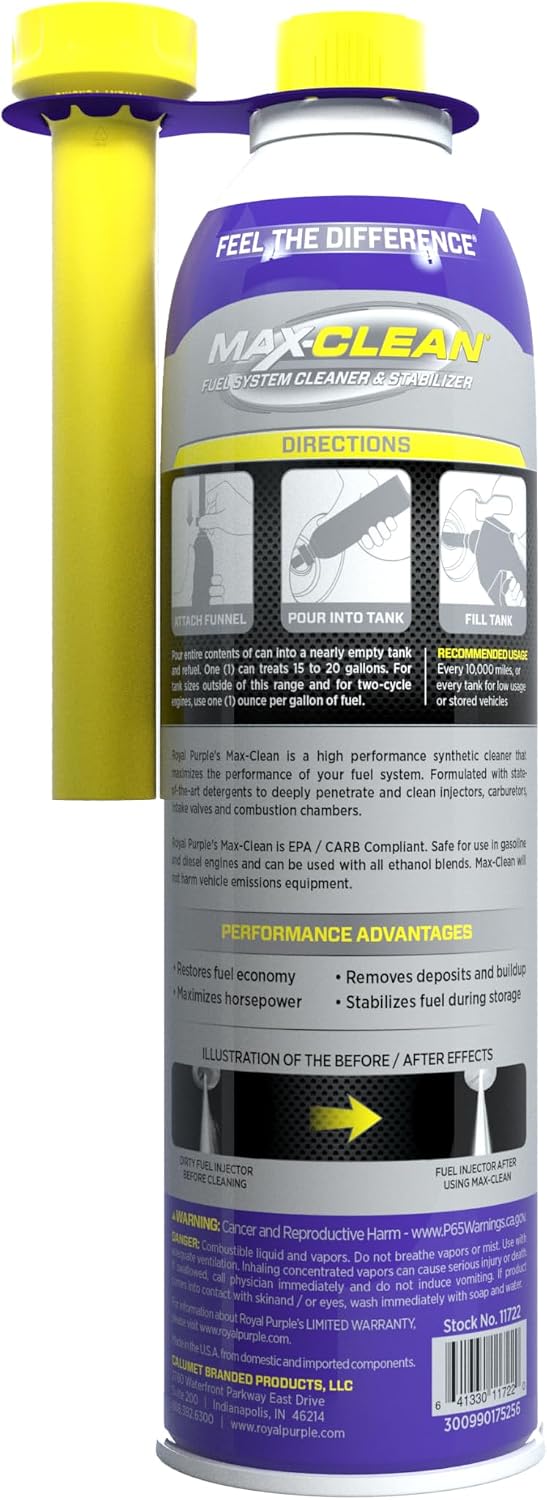
Royal
$11.64
In stock on Amazon
Check price on AmazonThe Ethanol Phase Separation Question
Ethanol is hygroscopic — it absorbs water from humidity in the air and through tank vents. Once enough water accumulates, the ethanol and water separate from the gasoline and drop to the bottom of the tank as a distinct phase. Small engines, with their low fuel draw rates, then sip that water-ethanol layer and run badly or not at all. SAE International’s Technical Paper 2019-01-0249 identifies this phase-separation behavior as one of the primary failure modes in ethanol-blended fuels during extended storage — and it is largely independent of oxidation, which means oxidation-only stabilizers do not address it.
No stabilizer fully prevents phase separation in a tank exposed to enough moisture over enough time. The honest framing is a spectrum:
- STA-BIL 360’s fuel-surface film slows moisture intrusion at the tank’s air-fuel interface
- Star Tron’s enzyme package is documented by the manufacturer to disperse existing water into smaller droplets that pass through the fuel system rather than phase-separating
- STA-BIL Storage provides minimal ethanol-specific protection relative to the 360 version
If you’re in a high-humidity storage environment, this distinction matters more than the headline shelf-life numbers. Neither product substitutes for draining the tank before extended storage in extreme conditions.
Frequently Asked Questions
Can you use a fuel stabilizer at every fill-up or only for storage?
Star Tron’s standard treat rate is formulated for continuous use as a fuel conditioner — 1 oz per 8 gallons works at every fill-up without issue. Chemical stabilizers like STA-BIL are designed for storage scenarios; using them at every fill-up isn’t harmful, but the antioxidant mechanism provides minimal additional benefit when fuel is being cycled regularly and not sitting long enough to oxidize significantly.
Does Star Tron’s enzyme formula actually fix old gasoline or just slow further degradation?
Based on the Star brite technical bulletin and consistent user field reports, Star Tron’s enzymes actively work on already-degraded fuel — breaking down and dispersing gum, varnish, and phase-separated water — rather than simply preventing further decay. That said, “fixes” overstates it: severely degraded fuel with heavy varnish deposits throughout a carburetor may still require physical cleaning. Think of it as meaningful remediation with realistic limits, not a universal cure.
What is the real difference between STA-BIL Storage and STA-BIL 360 Protection?
STA-BIL Storage is an antioxidant-and-corrosion-inhibitor package focused on preventing fuel oxidation and wet metal corrosion. STA-BIL 360 adds vapor-phase corrosion protection and an enhanced ethanol-intrusion barrier. For storage beyond 6 months, carbureted engines, or humid environments, the 360 formulation is the more complete tool.
Will a stabilizer prevent ethanol phase separation or just slow it down?
Slow it down — no additive at consumer treat rates fully prevents phase separation given enough time and moisture exposure. Star Tron’s water-dispersion mechanism gives it the best practical performance against existing phase separation; STA-BIL 360’s vapor-film approach helps at the point of moisture entry. Neither substitutes for draining the tank before extended storage in high-humidity conditions.
The Bottom Line: Match the Mechanism to the Problem
If your engine ran fine going into storage and you’re treating fresh fuel before a planned shutdown — reach for STA-BIL 360 Protection. Its chemistry is purpose-built for exactly that scenario, and its vapor-phase and ethanol-intrusion protection covers the full range of failure modes that an uninsulated garage winter can deliver.
If you’re staring at an engine that already sat through an untreated winter, or you inherited equipment with unknown fuel history — Star Tron is the call. The enzyme mechanism gives you a genuine remediation pathway that antioxidant-only formulas simply do not offer.
If budget is the primary constraint and your storage window is under a year with fresh fuel — STA-BIL Storage still does the job it was designed to do.
The confusion between “stabilizer,” “cleaner,” and “conditioner” is real and understandable — these products overlap in marketing language even when their chemistry diverges sharply. Match the mechanism to the problem, not the packaging to the shelf space, and you’ll get the outcome you’re actually after.