September 4, 2026 • Dale Merrick • 11 min reading time • Prices verified June 5, 2026
Catalytic Converter Additives Compared: Cataclean, Dura Lube, and Liqui Moly Against Real P0420 Codes
If you’ve got a Check Engine light glowing P0420 on your scan tool, you already know the short version: the catalytic converter — the emissions-control device in your exhaust that chemically converts harmful combustion byproducts into less-harmful gases — isn’t doing its job efficiently enough to satisfy the oxygen sensors monitoring it. What you’re probably weighing right now is whether a $20–$30 bottle of fuel additive can save you from a $1,500–$2,500 converter replacement bill. The honest answer is: sometimes yes, sometimes categorically no — and the difference almost always comes down to why the converter is failing, not which brand you pour in. This piece breaks down what the accumulated buyer record shows for Cataclean, Dura Lube Catalytic Converter Treatment, and Liqui Moly Catalytic System Clean, identifies the conditions where each has a realistic shot at working, and gives you a straight decision framework before you spend money in the wrong direction.
| EDITOR'S PICKAuto Parts Engine Boost Up Clea… | Mid-tierCataclean Fuel & Exhaust System… | Budget pickLiqui Moly Catalytic System Cle… | |
|---|---|---|---|
| Format | 6-pack | 16 fl oz | 300 ml |
| Gasoline | ✓ | ✓ | — |
| Diesel | ✓ | — | — |
| Emissions test | — | ✓ | — |
| Check engine light | — | ✓ | — |
| Targets | Fuel system | Converter + exhaust | Injection + chamber |
| Price | $35.99 | $27.94 | $15.47 |
| See on Amazon → | See on Amazon → | See on Amazon → |
The Variable That Determines Everything: Fouled vs. Thermally Dead
Before comparing products, you need the right diagnostic frame. Catalytic converters fail in two fundamentally different ways, and understanding which one you have is more important than any product choice.
Carbon and chemical fouling happens when unburned fuel residue, low-level oil contamination, or fuel-system deposits coat the precious-metal substrate — the honeycomb structure inside the converter — and suppress its chemical activity. The substrate is physically intact; it’s just gummed up. This is the failure mode where additives have a realistic mechanism of action. Detergents and oxygenating compounds can, at operating temperature, help burn off light deposits and restore some substrate surface area to active catalysis.
Thermal degradation happens when the substrate has been physically damaged — melted, fractured, or sintered — usually from a sustained misfire dumping raw fuel into the exhaust, or from extreme heat cycling over high mileage. Motor Age Training’s catalyst failure diagnostic materials (2023 edition) describe this process as “sintering of the precious-metal washcoat,” which causes irreversible loss of catalytic surface area. No additive chemistry reverses this. If your converter rattles, if you’ve had repeated misfires, or if the vehicle has over 150,000 miles of hard use with no maintenance history, thermal failure is the more likely explanation.
Underhood Service, a Babcox Media trade publication covering professional diagnostic practice, notes in its P0420 diagnostic guidance a third common cause: oil consumption. If your engine burns oil and the combustion byproducts reach the converter, the phosphorus in motor oil poisons the precious-metal catalyst — a chemical contamination that additives cannot undo. This root-cause issue is what makes “the CEL comes back in two weeks” an almost universal complaint across all three products reviewed here.
The decision framework starts here: if you have active misfires, confirmed oil burning, a rattling converter, or a vehicle with very high mileage and no maintenance history, no additive is likely to produce a durable fix. If you have a relatively well-maintained engine with no active driveability issues and a P0420 that appeared gradually, the fouling scenario is at least plausible — and worth the cost of an attempt before authorizing a replacement.
Three Products, Three Profiles
Cataclean: The Protocol Matters More Than the Product
Cataclean is the most reviewed catalytic converter additive in the English-language buyer record by a significant margin, which makes its pattern of successes and failures unusually legible.
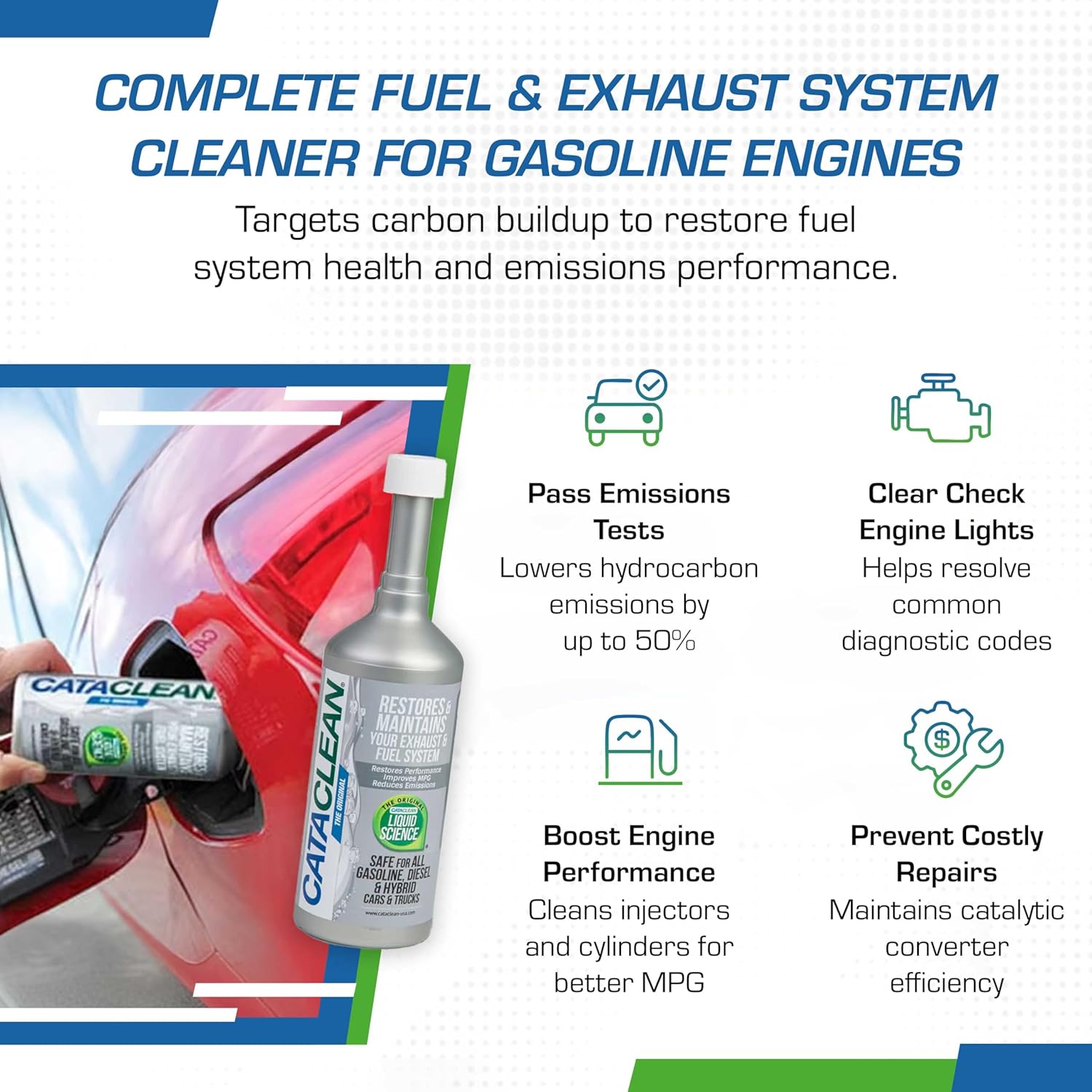
What the review record shows: Buyers who report clearing a P0420 with Cataclean almost universally describe two conditions: they added the product to a near-empty tank — roughly a quarter-tank or less — so the concentration was high, and they drove the vehicle hard, including sustained highway speeds that allowed the exhaust system to reach and hold full operating temperature. Buyers who added it to a full tank, drove gently around town, and then expected the light to extinguish report failure at a far higher rate. Concentration matters because Cataclean’s active chemistry — primarily oxygenating compounds and fuel-system detergents — needs to reach the exhaust stream at meaningful concentration to affect the converter substrate at temperature.
Widely reported buyer experience suggests waiting at least one full drive cycle — ideally 50–100 miles of mixed driving including a sustained highway segment — before expecting any OBD-II readiness monitor to run and potentially clear the code. Several reviewers report success only after a second treatment when the first produced no change. The successes cluster around lightly fouled converters on well-maintained engines. The failures cluster around high-mileage vehicles with multiple underlying issues.
Popular Mechanics, in its overview of fuel additive claims published by Hearst Autos, notes the general challenge with catalytic converter treatments: because the mechanism of action is indirect — clean the fuel system and combustion chamber, reduce the load of unburned deposits reaching the converter — these products don’t act on the converter substrate directly the way a solvent flush would. That indirect pathway is worth keeping in mind when setting expectations.
Cataclean 120007
$27.94
In stock on Amazon
Check price on AmazonDura Lube Catalytic Converter Treatment: Protocol Discipline Demonstrated
Dura Lube has a smaller review footprint than Cataclean, but what exists in the buyer record is unusually detailed. One of the more thoroughly documented user accounts in this product category comes from a 2005 Honda Pilot owner who described a multi-step approach: the product was added per label instructions, then the owner drove a specific highway loop at sustained 65–70 mph for approximately 45 minutes to bring exhaust temperatures up fully, followed by a cool-down period, then a repeated highway cycle. The P0420 cleared — and the owner documented the CEL not returning at the four-week check-in.
The instructive detail is what the owner had confirmed before treating: no active oil consumption, no active misfire. They weren’t using Dura Lube as a substitute for diagnosis; they were using it after ruling out the failure modes that additives cannot address. That diagnostic legwork is the real variable in the success narrative.
Dura Lube’s formulation is not publicly broken down in spec-sheet detail, which makes direct chemistry comparison with Cataclean difficult. What the review record suggests is a product that performs in a similar range under similar use conditions — which reinforces that protocol discipline matters as much as brand selection. The sustained highway cycle that brings exhaust temperature up fully appears to be the shared variable across successful outcomes for both products.
Liqui
$15.47
In stock on Amazon
Check price on AmazonLiqui Moly Catalytic System Clean: Upstream Chemistry and What the MPG Data Tells You
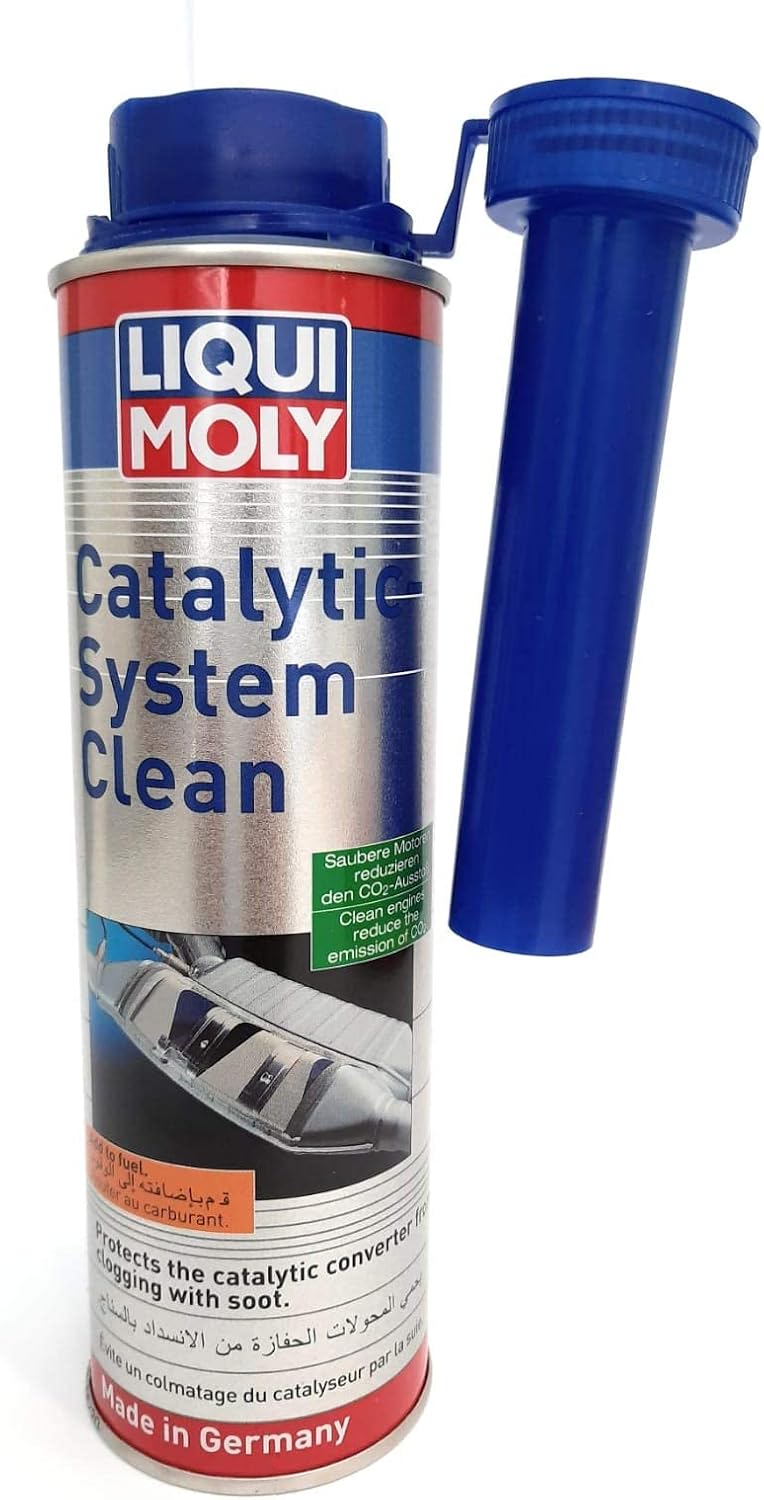
Liqui Moly Catalytic System Clean occupies a different position in this comparison. Liqui Moly consistently draws European-car owners and enthusiasts who value OEM-adjacent chemistry standards, and the brand’s documented OEM approvals across various products in its lineup lend credibility to the line generally.
The most quantified outcome in the buyer record for this specific product is a reviewer reporting a 3 MPG highway improvement after use. That number deserves scrutiny, because it’s almost certainly not direct evidence of converter restoration — it’s more likely evidence of combustion chamber and intake cleaning. The fuel-economy improvement pathway from a catalytic system cleaner runs through combustion efficiency: cleaner injectors, reduced intake deposits, and more complete combustion mean less unburned fuel reaching the exhaust stream. That reduces the converter’s workload and may allow a marginally performing catalyst to stay above the efficiency threshold the downstream oxygen sensor is watching.
This is a real and useful mechanism — but it’s worth understanding where it operates. Liqui Moly Catalytic System Clean may be doing more of its work upstream of the converter than on the converter substrate itself. For a vehicle where the P0420 was triggered partly by combustion-side inefficiency loading the catalyst with excess hydrocarbons, this is exactly what you’d want. For a converter with physical substrate damage, the upstream cleaning doesn’t change the downstream outcome.
SAE International’s Technical Paper 2019-01-0742, covering exhaust aftertreatment system degradation mechanisms and catalyst poisoning, identifies hydrothermal aging and chemical poisoning of the precious-metal washcoat as the dominant failure modes in high-mileage vehicles — neither of which is addressable by fuel-borne chemistry, regardless of formulation quality.

Auto
$35.99
In stock on Amazon
Check price on AmazonSide-by-Side Summary
| Product | Best Use Protocol | Primary Mechanism | Best-Case Scenario |
|---|---|---|---|
| Cataclean | Quarter-tank + 50–100 mi hard drive | Oxygenating compounds + detergents | Light carbon fouling, healthy engine |
| Dura Lube Cat Treatment | Full tank + sustained highway cycle | Detergent/oxygenate blend | Same; diagnostic ruling-out critical |
| Liqui Moly Catalytic System Clean | Per label (typically full tank) | Combustion chamber + system clean | Upstream load reduction; combustion-side fouling |
Frequently Asked Questions
How long after using Cataclean should I wait before an emissions test?
At least one full drive cycle of 50–100 miles, including sustained highway driving, before expecting OBD-II readiness monitors to reset. Most state emissions test protocols require specific monitors to show “ready” status before the test is valid. If codes were cleared — manually or on their own — the monitors need time to run through their self-evaluation cycles. Many buyers report needing 100–150 miles of mixed driving before all monitors complete. Don’t go directly to the test facility after treatment; give the system time to evaluate itself under real driving conditions.
Does Liqui Moly Catalytic System Clean work differently than Cataclean, or is it the same chemistry in different packaging?
The formulations are not publicly identical. Cataclean’s oxygenating compound approach and Liqui Moly’s detergent-forward combustion system chemistry are marketed as different mechanism priorities, and the review record does suggest Liqui Moly’s strongest signal appears in combustion-efficiency outcomes — the MPG data point — rather than direct code clearing. Whether that reflects a genuine chemistry difference or a different buyer population and use pattern is difficult to determine from review data alone. For a straight P0420 clearing attempt, Cataclean has the larger documented success base. For a vehicle where combustion deposits are also suspected, Liqui Moly’s broader system approach may address more of the contributing factors simultaneously.
Can any additive fix a P0420 caused by oil burning rather than carbon fouling?
No. This is the hard boundary. Oil consumption introduces phosphorus compounds into the exhaust stream that chemically poison the precious-metal catalyst substrate — specifically forming compounds with the platinum and palladium that suppress catalytic activity. The EPA’s Office of Transportation and Air Quality, in its materials on catalytic converter function and failure under the Clean Air Act, identifies phosphorus poisoning as one of the primary causes of permanent catalyst degradation. This is a chemical contamination mechanism that fuel-borne additives cannot reverse. If your engine is burning oil at a measurable rate between oil changes, address the oil consumption first. No additive will produce a durable P0420 fix in that condition.
If the CEL clears but comes back within two weeks, what does that tell me?
It tells you almost certainly that the underlying cause hasn’t been addressed. A P0420 that returns within two to four weeks of clearing — whether by additive treatment or a manual reset — is the diagnostic signature of an ongoing condition: active oil burning, a small injector leak enriching the mixture, a marginal misfire that doesn’t set its own code, or a converter that was already at the efficiency boundary and cannot be pushed back above threshold by cleaning chemistry. Underhood Service’s P0420 diagnostic guidance, published by Babcox Media, describes this return pattern as a strong indicator to shift diagnostic focus away from the converter itself and toward root-cause combustion and fuel-trim analysis. In practical terms: if the light returns in under a month, a second bottle is not the answer. A live data scan of fuel trims, O2 sensor waveforms, and a compression and leak-down check is the next step.
Is the spray-through-O2-sensor method with a solvent product safe for modern sensors?
This technique — removing an upstream oxygen sensor and spraying a solvent product directly into the exhaust port to reach the converter substrate — appears in buyer reviews as a YouTube-sourced approach, not anything manufacturers endorse or describe in product instructions. It should be treated strictly as user-reported technique. The risks include O2 sensor damage from reinstallation torque issues, potential damage to the wideband sensors used in modern vehicles (which are considerably more sensitive than the narrowband sensors this approach was developed around), and catalyst substrate damage from solvent concentration at cold temperatures. This is not a procedure to undertake casually, and this editorial does not endorse it.
The Decision Rule
If your engine is healthy — no misfires, no confirmed oil consumption, fuel trims within ±10%, and the P0420 appeared gradually on a vehicle with reasonable maintenance history — a Cataclean treatment following the quarter-tank/hard-drive protocol is a reasonable $20–$30 experiment before authorizing a converter replacement. Give it 150 miles before evaluating the outcome.
If your engine has any active issues — burning oil, rough idle, intermittent misfires, or fuel-trim numbers pulling hard lean or rich — fix those first. No catalytic converter additive will produce a durable result on top of an unresolved root cause. The two-week-return pattern across the buyer record makes this case consistently enough to treat it as a rule rather than a caution.
If the converter rattles, if you’ve had a major misfire event, or if the vehicle is high-mileage with no documented maintenance, the math favors moving directly to replacement diagnosis rather than spending time and money on additive attempts that the failure mode cannot respond to.
The additive is not the gamble — the gamble is whether you’ve done enough diagnosis to know which game you’re playing before you pour anything in.